How to use the festival map
Each marker is one festival, numbered in the same order as the list below the map. The shape and colour show the season in which the festival usually starts: hexagons for winter, circles for spring, squares for summer and diamonds for autumn. The first row of buttons filters by time: “This month” keeps only festivals that are usually on during the current month in Korea, and “Next 3 months” adds the two months after it, which is the easiest way to see what fits your trip. The season buttons below work on top of that, and “Show all” switches every season back on.
Tap or hover over a marker to see the dates, a short description, the official website, the VISITKOREA page and, where the organizer or local government has one, a link to an official video on YouTube. Videos open on YouTube; nothing is embedded on this page. The Seoul close-up shows the 2 festivals held in the capital, and “Open in Naver Map” searches the festival’s Korean name, which is the most reliable way to find the venue in the map app Koreans use.
How we chose the festivals
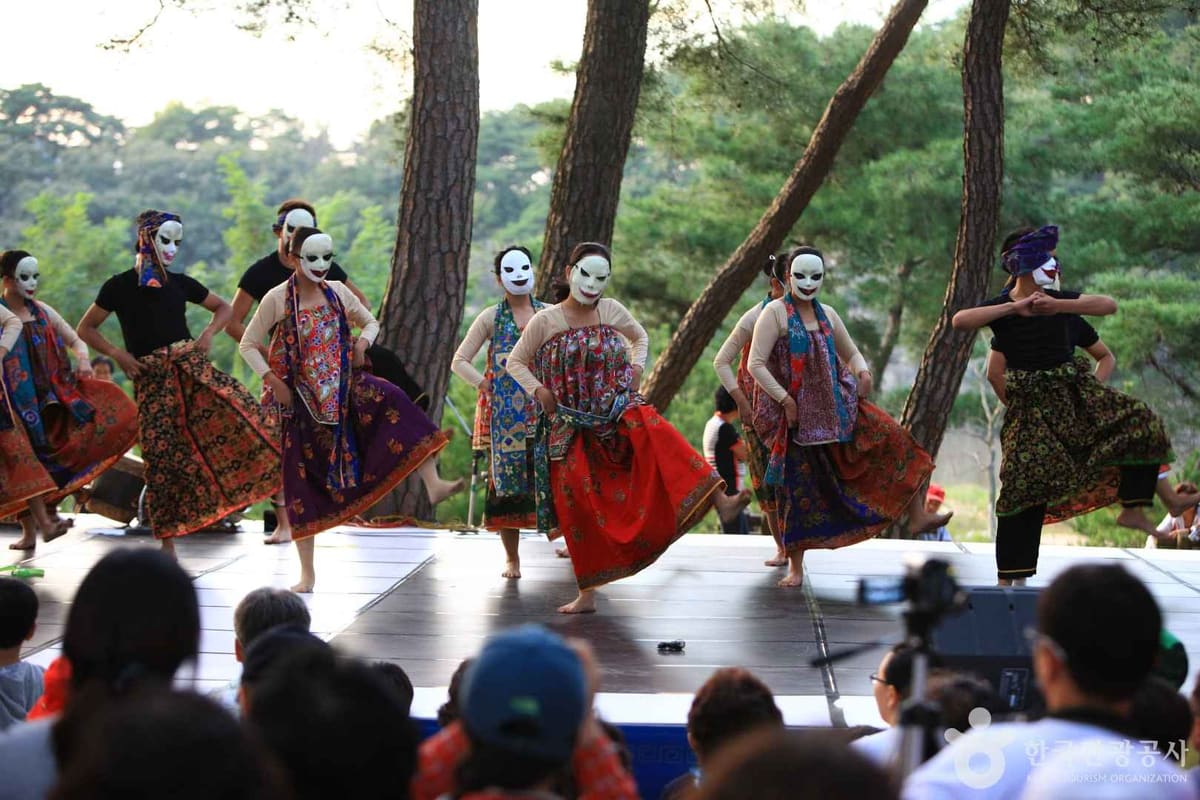
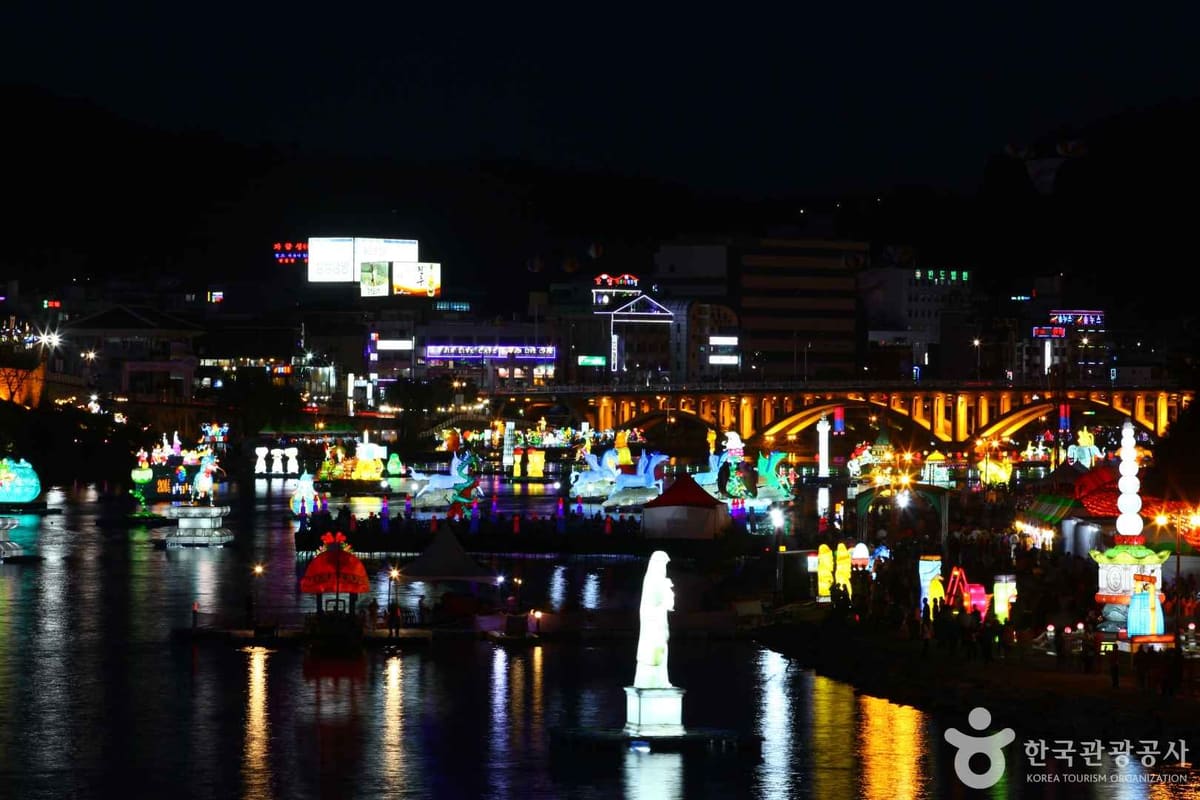
The map has 36 festivals. The core is the full list of 27 Cultural Tourism Festivals that the Ministry of Culture, Sports and Tourism selected for 2026 and 2027 (announced on 23 January 2026). Two of them are listed for 2026 only and two for 2027 only, and the card says so. We added nine festivals that many visitors ask about: the Hwacheon Sancheoneo Ice Festival (one of the ministry’s Global Festivals), the Taebaeksan Snow Festival, the Seoul Lantern Festival, the Lotus Lantern Festival (Yeon Deung Hoe), the Boryeong Mud Festival, the Andong Maskdance Festival, the Jinju Namgang Yudeung Festival, the Jinhae cherry blossom festival and the Tamna Culture Festival in Jeju.
Coordinates come from the Korea Tourism Organization’s page for each festival and point at the main venue. Many festivals spread across a town, so treat the marker as the centre of things, not an exact gate.
About the dates
Korean festivals set their dates each year, often only a few weeks or months ahead, and some move because of elections, weather or outbreaks of animal disease. We only show the next edition’s dates when the organizer itself has published them. When we checked on 11 November 2026, that was true for the Hwacheon Sancheoneo Ice Festival, the Seoul Lantern Festival and the Lotus Lantern Festival. For every other festival the card shows the usual month and the dates of the last edition, so you can plan roughly and then confirm on the official site. Some tourism listings show next year’s dates before the organizer does; we leave those out until the organizer confirms them.
Winter festivals
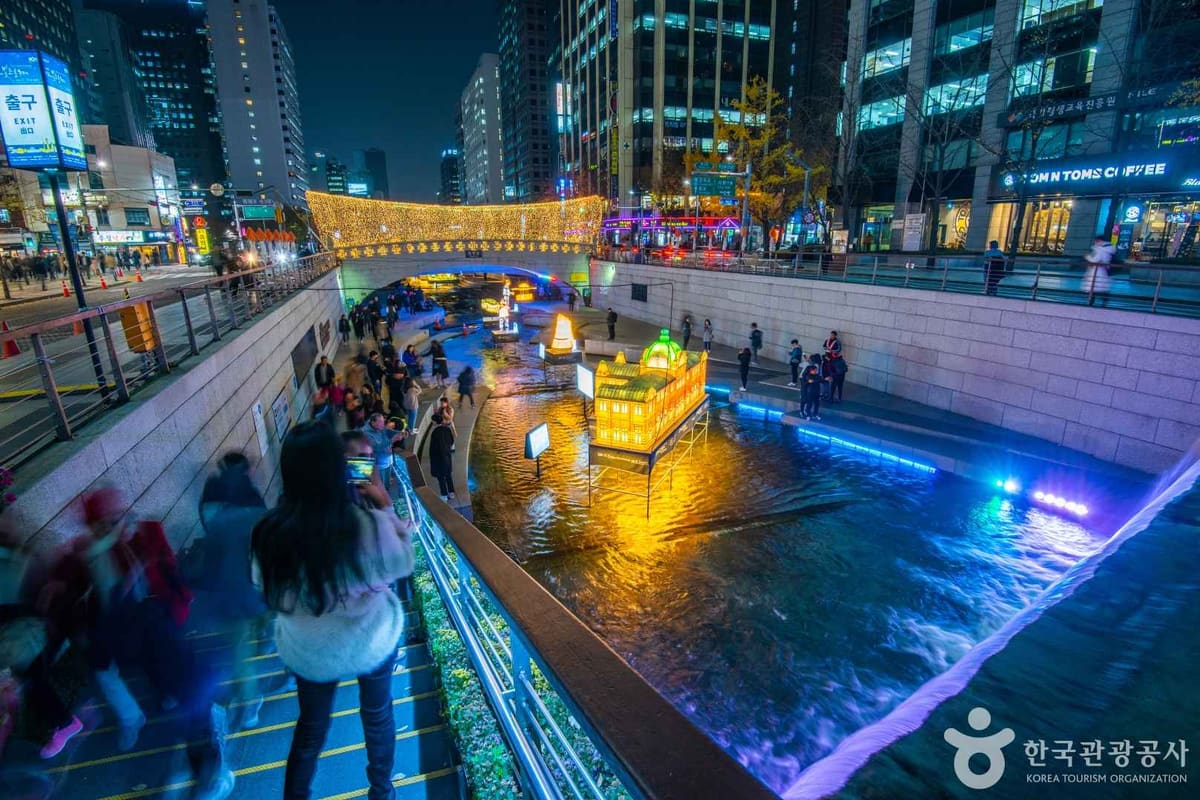
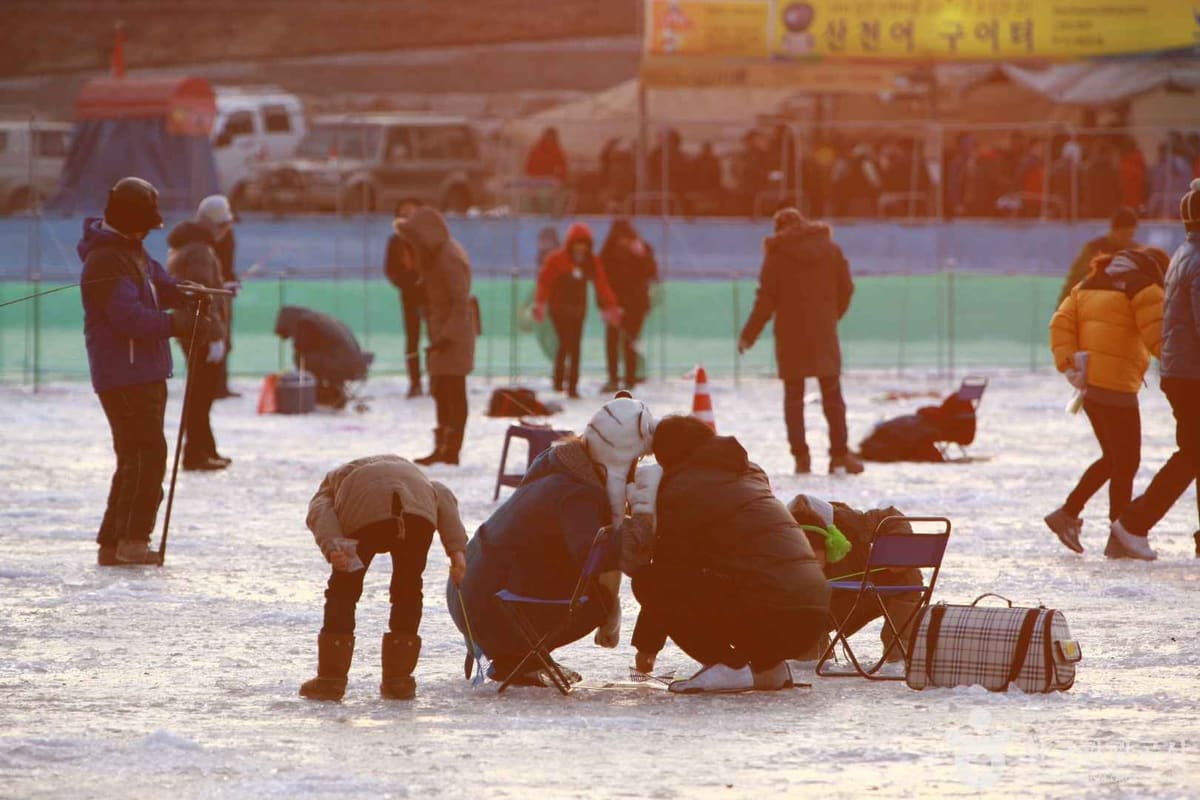
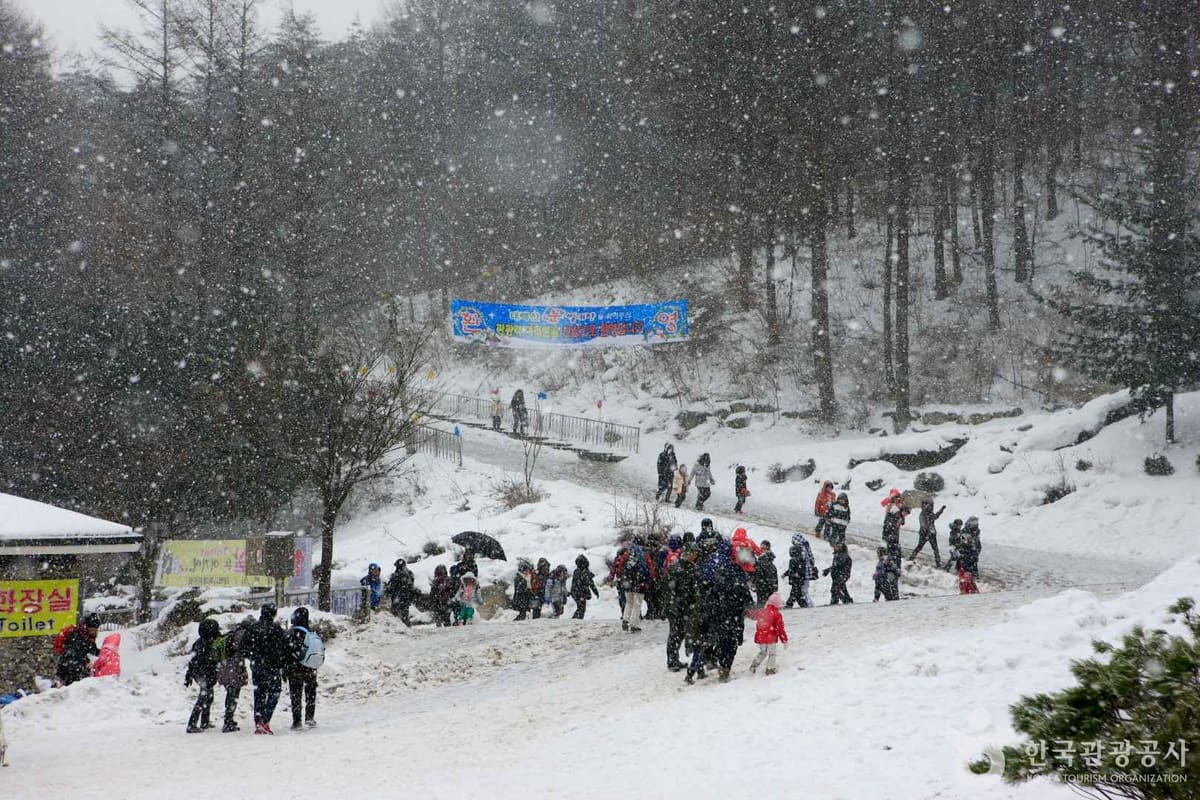
Winter is when Gangwon-do comes alive. In Hwacheon and Pyeongchang you fish for trout through holes in a frozen stream and can have your catch grilled on the spot; in Cheorwon you walk on the frozen Hantangang River between basalt cliffs; at Taebaeksan you see giant snow sculptures. In Seoul the lantern festival along Cheonggyecheon Stream is free and easy to reach by subway. Ice festivals depend on the ice: in a mild winter, openings are delayed or programmes are cut, so check the organizer’s notices the day before you go.
Common questions
How do I check this year’s dates?
Open the “Official website” link on the card. Korean festival sites put the dates at the top of the home page, usually as YYYY.MM.DD. If the site is only in Korean, the VISITKOREA link gives the same festival in English with the period, venue and organizer, but compare it with the organizer’s site, because tourism listings are sometimes updated later. For the next edition of festivals marked “not announced yet”, look again about one to three months before the usual month.
How do I get to a festival outside Seoul?
Most regional festivals are reached by intercity or express bus from Seoul, or by KTX or ITX train to the nearest city and then a local bus or taxi. Big festivals such as Hwacheon, Boryeong, Jinhae and Jinju run extra shuttle buses from the local terminal or station, and some, such as Siheung Gaetgol, keep cars out completely. The organizer’s site has a “directions” (오시는 길) page. Weekends are crowded, so book bus or train seats in advance and plan to arrive early.
Is it safe to go on the ice at winter festivals?
Stay inside the areas that the festival marks and manages: organizers check the ice and staff open or close zones. Korea’s Ministry of the Interior and Safety and the National Fire Agency advise people to stay out of ice areas that are not managed, to wear a life jacket when playing on or near ice, to obey “no entry” signs and to call 119 at once if someone falls through, rather than going onto the ice yourself. Dress in layers with waterproof boots, gloves and a hat, take breaks somewhere warm, and remember that ice becomes unsafe quickly as the weather warms in February and March.
Are the festivals free?
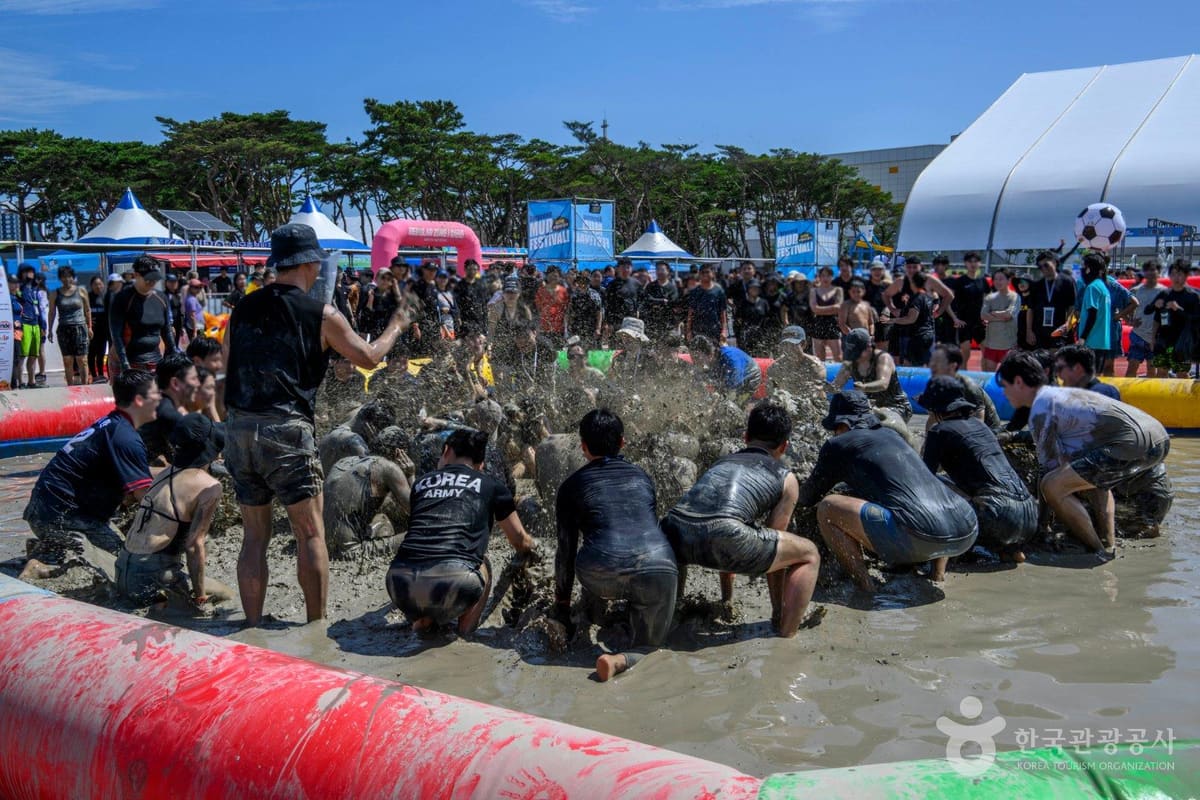
Most of these festivals are free to enter, but activities often cost money: ice fishing, the mud experience zones in Boryeong, boat rides, workshops and food. Rock and music festivals such as Incheon Pentaport and Busan International Rock Festival, and the Bucheon comics festival, sell tickets. Some programmes must be booked online in advance, and booking pages may need a Korean phone number; foreign visitors can ask the organizer by phone or email, or go to the on-site counter.
Do I need to speak Korean?
No, but it helps to have the Korean name ready, which the card shows next to each festival. Big festivals often have English signs, interpreters or a foreign visitor desk, and the 1330 Korea Travel Hotline answers questions in several languages. Our Korean phrases for travelers page has sentences for buying tickets and asking the way, and the weather by month page helps you pack.