Last checked: 2026-10-18. Forecast dates change every year. Everything below about 2026 comes from the Korea Forest Service, the Korea National Arboretum, the Korea Meteorological Administration (KMA) and VISITKOREA, and was checked on this date. We update this page each year, and the dates for the next season will be added when official forecasts appear.
Korea’s two big color seasons are short and move from year to year. Autumn leaves peak at different times on different mountains from mid-October to mid-November. Cherry blossoms open in late March or early April, and Seoul’s first bloom has swung across about eleven days in the years we could check. The most useful thing to know is not one magic date but who publishes the forecasts, what each one means, and how big the error is. This guide covers all three, and gives you the official 2026 numbers as a worked example.
The short version
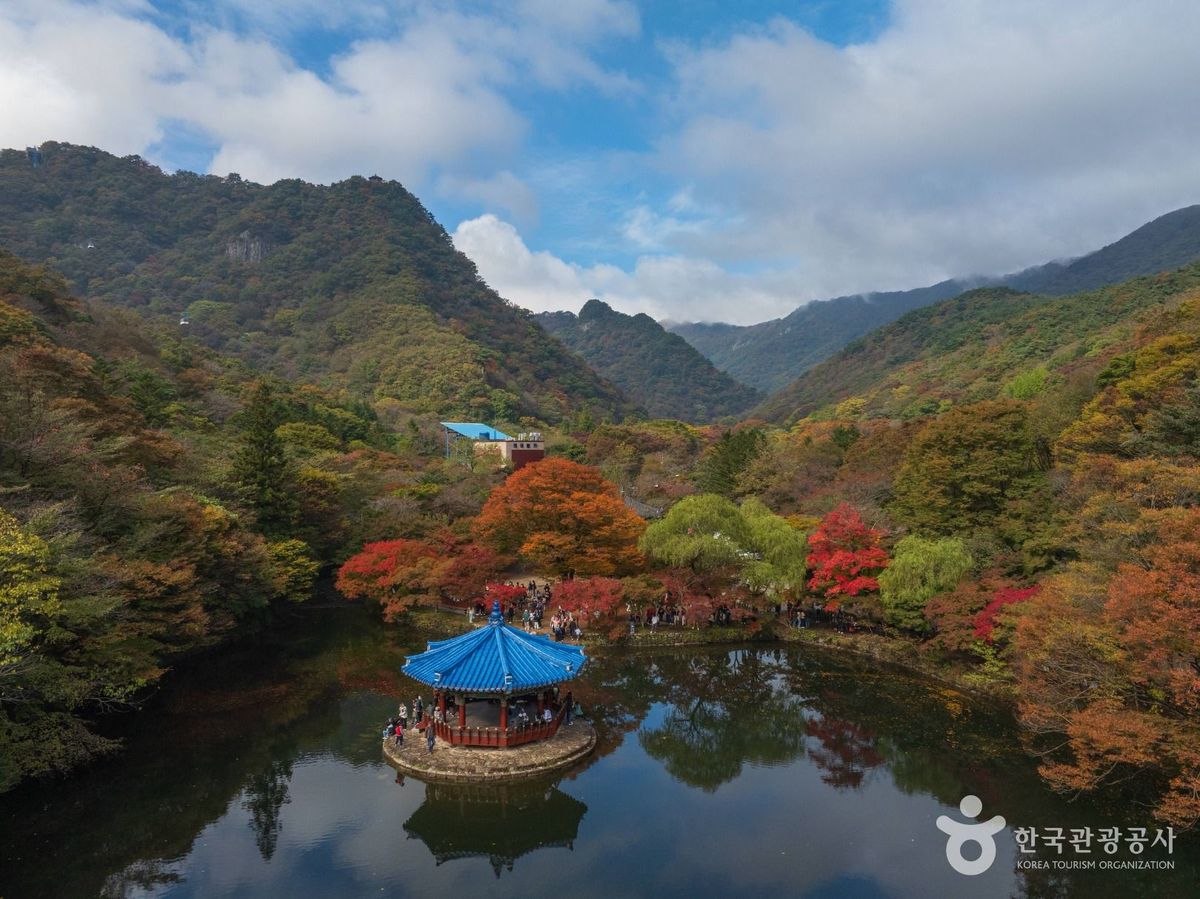
- Autumn 2026: the Korea Forest Service forecast a nationwide peak in late October. Maple and oak around October 31, ginkgo around October 30. By mountain: Seoraksan October 20, Songnisan October 28, Naejangsan November 4, Hallasan November 6.
- “Peak” is not one thing. The Forest Service means 50% of leaves changed. KMA’s mountain peak means about 80%. A private forecaster quoted by VISITKOREA gave dates up to a week later for the same mountains.
- Cherry blossoms 2027: as of October 18, 2026 we could not find any official forecast, which is normal. In 2026 the first official forecasts appeared in late February.
- Typical Seoul timing: KMA’s normal first bloom for Seoul is April 8, with full bloom around April 10. Recent actual first-bloom dates we could confirm ranged from March 24 to April 4.
- Plan for error. In 2026, a VISITKOREA forecast put Seoul’s first bloom on April 3. KMA recorded it on March 29, five days earlier.
- Booking: keep dates and hotel bookings flexible until the forecast is close. See where to stay in Korea for how to check a listing.
Who publishes Korea’s foliage and blossom forecasts?
Several organizations publish dates, and they measure different things. Mixing them is the main reason travelers get confused.
| Publisher | What it publishes | What “peak” or “bloom” means | When we saw it |
|---|---|---|---|
| Korea Forest Service and Korea National Arboretum | A nationwide foliage peak map by mountain and tree species; a spring flower full-bloom forecast | Peak or full bloom = 50% of leaves changed or flowers open | Foliage map September 22, 2026; spring map February 24, 2026 |
| Korea National Arboretum | A search tool that gives an estimated peak date for a road address or building | More than 50% of the tree’s leaves changed | Launched September 29, 2026 |
| Korea Meteorological Administration (KMA) | Observations (the releases we read contain no forecast): first autumn color, mountain peak, first bloom and full bloom | Mountain: first color about 20% from the summit, peak about 80%. Cherry: first bloom = three or more flowers open on one branch of the standard tree; full bloom = 80% of flowers open | Seoraksan first color September 28, 2026; Seoul first bloom March 29, 2026 |
| VISITKOREA (Korea Tourism Organization) | Travel-oriented foliage and cherry blossom forecast tables | Not defined on the page; data credited to private weather companies | Foliage September 2026; cherry blossoms February 26, 2026 |
KMA’s Weather Nuri site shows cherry blossom status by region, but only in season: its page says data runs from early March to late May.
What did the official 2026 autumn forecast say?
The Korea Forest Service released its “2026 Korean Peninsula Autumn Foliage Peak Forecast Map” on September 22, 2026. According to the release:
- the first leaf color of the year was recorded on September 14 at the Jeombongsan forest genetic resources reserve, by a citizen observer,
- color begins in early October in the northern mountains of Gangwon, and a nationwide peak is expected in late October,
- the change spreads from Seoraksan to the central and then southern regions,
- compared with the average of the past five years, this year’s forecast peak is about 0.8 days later.
The forecast peak dates:
| Mountain or tree | Forest Service forecast peak (50% of leaves) | VISITKOREA table (September 2026, private forecaster) |
|---|---|---|
| Seoraksan | October 20 | October 25 |
| Songnisan | October 28 | not listed |
| Bukhansan (Seoul) | not listed | November 4 |
| Jirisan | not listed | November 5 |
| Naejangsan | November 4 | November 11 |
| Hallasan (Jeju) | November 6 | November 13 |
| Maple and oak (nationwide) | October 31 | not listed |
| Ginkgo (nationwide) | October 30 | not listed |
The gap is large: five to seven days on the same mountains. The two tables define peak differently, or at least the VISITKOREA page does not define it, so don’t compare the columns line by line. Our practical reading is that the Forest Service date marks when about half the leaves have turned, and that the best viewing window spans a week or so around it.
What actually happened on Seoraksan? KMA’s Gangwon office recorded the first autumn color on Seoraksan on September 28, 2026, which matches the normal date and is four days earlier than 2025. KMA’s release gives the normal peak as October 17 and the 2025 peak as October 24. It does not give a 2026 peak forecast. So KMA’s measure of Seoraksan’s peak (about 80% changed) came on October 24 in 2025 and normally falls on October 17, while this year’s forecasts of the Seoraksan peak were October 20 (Forest Service, 50%) and October 25 (VISITKOREA). Three definitions and three numbers all point to the same rough window: about October 17 to 25.
How do you check the foliage date for one specific place?
For a specific park, garden or temple, use these tools, in this order:
- Korea National Arboretum search service. Since September 29, 2026 you can enter a road address or building name and get the expected peak date for that spot. It is on the National Biodiversity Information System phenology site (knpn.nature.go.kr), under Observation Records > Seasonal Forecast. The Arboretum says the results are estimates, not confirmed dates, and built partly on observations from 829 citizen volunteers in 2025.
- KMA Weather Nuri. KMA’s September 28 release says it provides current foliage status and weather information through the Weather Nuri website, plus a Gangwon service for national park trails.
- The local government or park office’s own notice, for festivals and opening dates.
Search in Korean or copy the Korean address from Naver Map or KakaoMap if the English name returns nothing. Our map app guide shows how.
Where do official sources send visitors for autumn color?
VISITKOREA’s 2026 foliage page names these places (this is a list from the tourism organization, not our ranking):
| Area | Places named |
|---|---|
| In Seoul | Gyeongbokgung Palace, Seoul Forest, Olympic Park, N Seoul Tower |
| Seoul outskirts | Hwadam Botanic Garden, Nami Island, The Garden of Morning Calm |
| Farther away | The ginkgo forest in Hongcheon, Jangtaesan in Daejeon, Baegyangsa Temple in Jangseong, Bulguksa Temple in Gyeongju |
Opening hours, entry rules and festival dates for these places change from year to year, so check each place’s own announcement. For getting around, see the subway and T-money guide and the KTX and SRT guide.
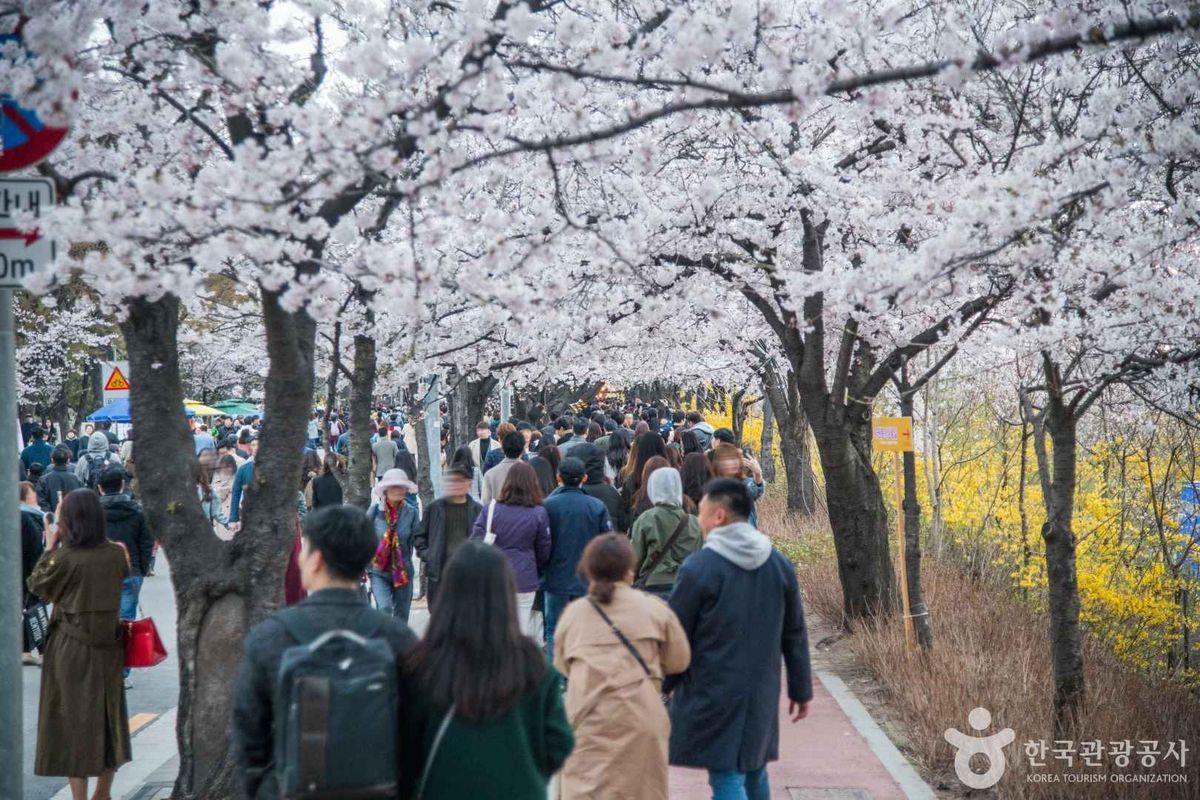
When do cherry blossoms bloom in Seoul?
KMA tracks Seoul’s cherry blossoms on a designated Yoshino cherry (왕벚나무) at the Seoul Meteorological Observatory in Jongno-gu, with records back to 1922. It also tracks a cluster of trees on Yeouido’s riverside road. The release defines first bloom as three or more flowers fully open on any one branch of the standard tree, and full bloom as 80% or more open.
KMA’s normal dates (the release doesn’t say which years are averaged):
| Place | Normal first bloom | Normal full bloom |
|---|---|---|
| Seoul observatory tree | April 8 | April 10 |
| Yeouido riverside road | April 6 | not given |
Seoul’s actual first-bloom dates we could confirm:
| Year | First bloom in Seoul | Source |
|---|---|---|
| 2026 | March 29 | KMA, March 29, 2026 |
| 2025 | April 4 | KMA, April 4, 2025 |
| 2024 | April 1 | KMA, April 4, 2025 |
| 2023 | March 25 | table attached to KMA’s 2026 release |
| 2022 | April 4 | table attached to KMA’s 2026 release |
| 2021 | March 24 | same table |
| 2020 | March 27 | same table |
The pattern is plain: the normal date is April 8, but five of these seven years bloomed a week or more earlier. If recent years are a guide, late March to early April is the realistic window for Seoul. That is an observation from the table above, not a prediction.
How wrong can a forecast be?
2026 gives a clean example because three sources can be compared:
- The Korea Forest Service (February 24, 2026) forecast a nationwide full bloom for cherry trees of April 7 (50% of flowers open, an average over its observation sites), against April 8 in 2025.
- VISITKOREA (February 26, 2026) forecast first bloom for Jeju and Busan on March 25, Jeonju and Gyeongju on March 28, Gangneung on April 1, Seoul on April 3 and Incheon on April 7. It expected full bloom in Seoul around April 10 and said blossoms usually peak about a week after first bloom. The page credits a private weather company and says actual dates may differ.
- KMA recorded Seoul’s first bloom on March 29, five days before the VISITKOREA forecast and ten days before the normal date.
A five-day miss is typical of what these forecasts can do. The Forest Service reported in June 2023 that its spring forecast for several flowers (not cherry trees) had been off by about six days on average. Plan for plus or minus a week, not plus or minus a day.
When will the 2027 forecast appear?
As of October 18, 2026 we found no official 2027 cherry blossom forecast, and that is normal. The 2026 forecasts came out at the end of February (Forest Service February 24, VISITKOREA February 26), and KMA’s bloom status page runs from early March. We expect something similar in 2027 but can’t promise it.
Here is a planning calendar, based on when each source published in 2026:
| When | What to look for |
|---|---|
| Now to January | Nothing official. Use the normal and recent dates above for rough planning |
| Late February | Korea Forest Service spring flower map and VISITKOREA forecast |
| March | KMA first-bloom observations in the south, then Seoul. Weather Nuri’s bloom page opens in early March |
| Late September (autumn 2027) | Forest Service foliage map and the National Arboretum address search; in 2026 they came on September 22 and September 29 |
Festival schedules, such as Jinhae’s naval port festival and the Yeouido cherry blossom events, are set by their organizers each year. We could not confirm any 2027 dates, so check the organizer’s announcement before booking. Our public holidays tool lists national holidays that may affect crowds.
How should you plan around the uncertainty?
These are our suggestions, not official advice:
- Pick a window, not a day. For spring in Seoul, a window from the last week of March through the second week of April covers the seven years above. For autumn, a window of about ten days around the Forest Service date works for the mountains.
- Use refundable bookings until a forecast near your dates comes out, and read cancellation terms carefully.
- Go south or north to adjust. In both seasons the color moves across the country over several weeks. If you are early or late in Seoul, other regions may still be at peak.
- Dress for the weather. Mountain temperatures drop fast. See weather by month.
- Budget for crowds and prices. Use the trip budget tool.
FAQ
When is the best time to see autumn leaves in Korea?
It depends on the place. Using the 2026 Forest Service forecast as an example, Seoraksan peaks first (October 20), the national average for maple and oak is October 31, and southern and island mountains such as Naejangsan (November 4) and Hallasan (November 6) come later. Check the current year’s forecast, because dates move.
What is the difference between “first color” and “peak” foliage?
KMA calls it first color when about 20% of a mountain has changed, starting from the summit, and peak when about 80% has changed. The Korea Forest Service and National Arboretum call it peak when 50% of leaves have changed. Always check which definition a forecast uses.
When do cherry blossoms bloom in Seoul?
KMA’s normal date for Seoul’s first bloom is April 8, and full bloom is around April 10. In recent years first bloom came between March 24 and April 4 in the years we confirmed. 2026 was March 29.
Is there an official 2027 cherry blossom forecast yet?
Not that we could find as of October 18, 2026. In 2026, the Korea Forest Service published its map on February 24 and VISITKOREA published its forecast on February 26. We expect something similar for 2027 but have no confirmation.
Which forecast should I trust?
Treat all of them as estimates. The Forest Service and National Arboretum maps are government products with a stated definition (50%), and KMA publishes observations with a stated definition. VISITKOREA’s tables are useful for trip planning but credit private forecasters and don’t define their terms. When they disagree, plan around the range.
How do I check a specific park or temple?
Use the National Arboretum’s address search (knpn.nature.go.kr, Observation Records > Seasonal Forecast), which launched on September 29, 2026 and gives an estimated peak date for a road address or building.
Are the festival dates fixed?
No. Organizers set them each year and may change them with the weather. Check the organizer’s official announcement.
This is an unofficial guide and is not affiliated with the Korea Forest Service, KMA or the Korea Tourism Organization. Forecasts are estimates, and conditions on the day can differ. We will refresh the dates each year.