Last checked: 2026-10-27 (the Immigration Act passport provisions were re-read on that date; other sections were last checked 2026-10-18). Legal points come from the current text of Korean laws on the National Law Information Center. Descriptions of accommodation types follow the Korea Tourism Organization’s VISITKOREA site. This is general information, not legal advice. Rules and listings change, so confirm with the property and the local district office if something matters for your trip.
Most visitors will be fine with a hotel, a motel or a guesthouse booked through a major platform. The trouble starts with the in-between cases: a “private room” in an apartment, a listing with no address, or a “hotel” that turns out to be a motel. The short version is that Korea has several separate legal categories for lodging, an Airbnb-style stay is legal only when the host holds the right registration, and you should always carry your passport. This guide explains the categories, how to check a listing, what happens at check-in and where to turn when something goes wrong.
The short version
- Hotels, motels, hanok stays and guesthouses are all normal, legal choices when the business is registered or notified with the local district office.
- A home listing is legal only in specific cases. The main route for foreign visitors is the foreigner tourist urban minbak (외국인관광 도시민박업): a city resident rents out the home they live in, to foreign tourists, under a registration.
- Ask the host for the registration. Registered businesses receive a certificate from the district office. If a host can’t say which license the place operates under, treat that as a warning sign.
- Carry your passport. Foreigners staying in Korea must carry their passport or ARC at all times and show it on request, and nearly every accommodation will ask for it at check-in.
- Nothing here depends on the neighborhood. We don’t rank areas, because that is opinion. We cover how to choose a base by transport and by what you need to do.
- Problems: the 1330 Korea Travel Helpline handles tourist complaints in several languages.
What kinds of places can you stay in Korea?
VISITKOREA lists hotels, motels, hanok stays, guesthouses, pensions and glamping as the main kinds of places to stay. Behind those friendly names sit different legal categories, which matters when you check whether a listing is legitimate. The table matches the everyday names with the categories we could confirm in the statutes.
| Everyday name | What VISITKOREA says | Legal category (as we read the statutes) |
|---|---|---|
| Hotel | Anything from five-star international and Korean brands to budget business hotels | Registered tourism hotel business under the Tourism Promotion Act (hotels display an official grade mark), or general lodging notified to the district office |
| Motel / inn | The most cost-effective option; newer ones can match hotels for bedding and bathtubs; some motels have “hotel” in their name | General lodging business, notified to the district head under the Public Hygiene Control Act |
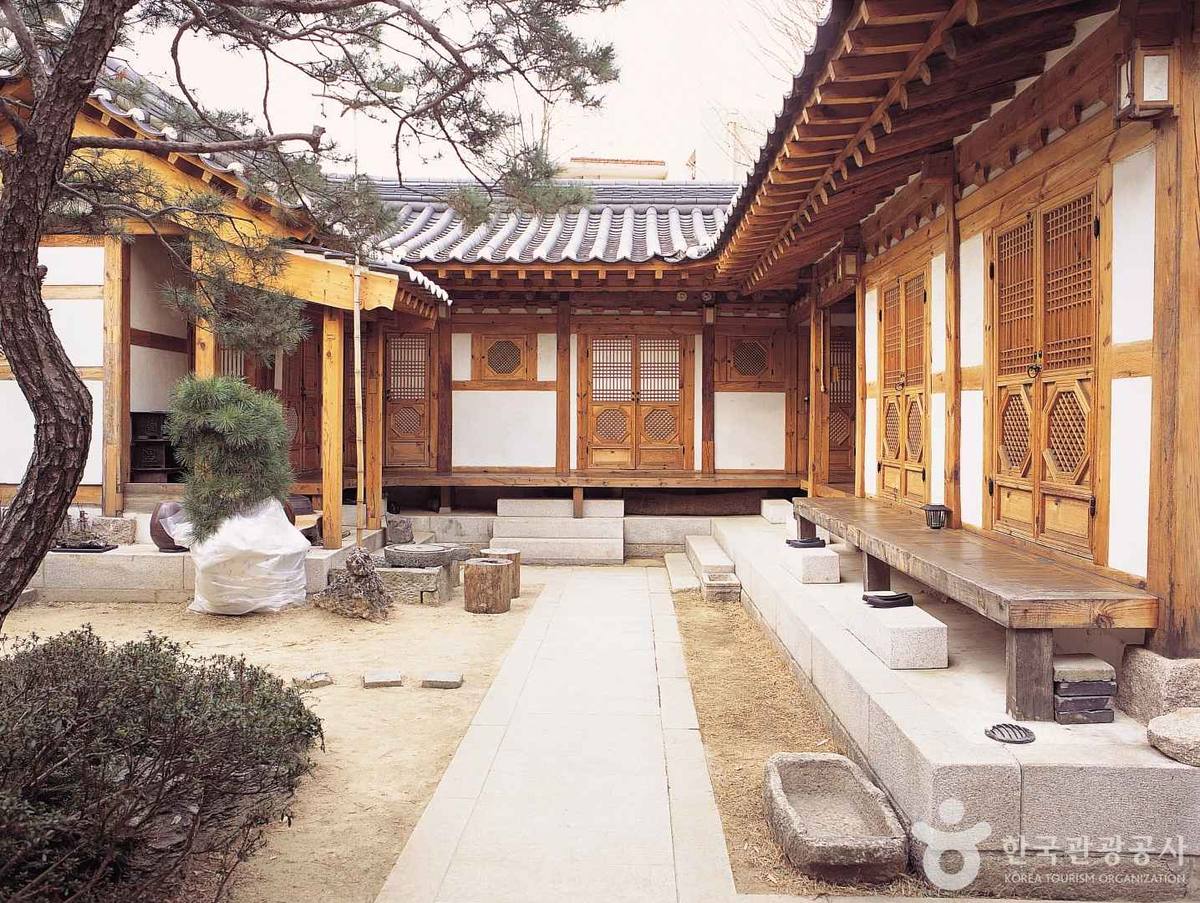
| Hanok stay | A traditional Korean house with a yard and a wooden-floor hall; many now offer beds | Hanok experience business, registered under the Tourism Promotion Act |
| Guesthouse / hostel | Generally cheaper; dorms, private rooms for one or two, women-only options | Depends: registered hostel business, foreigner urban minbak, or general lodging |
| Foreigner urban minbak | A city resident hosts foreign tourists in their own home | Registered under the Tourism Promotion Act |
| Pension | Home-like buildings to resort standard; popular ones can need booking months ahead | Not covered in detail here; check the property’s registration |
| Glamping | Camping with the equipment supplied; mountain or seaside sites | Not covered in detail here; check the site’s registration |
Two details from the statutes help when you read a listing:
- Hotel businesses can carry an official mark. The Tourism Promotion Act lets registered tourism businesses display a tourism mark. The rules for the mark include a star-based grade mark for hotels. A business that is not registered may not display the mark or pass itself off as a registered business.
- Hanok stays and foreigner minbak are small by definition. Under the enforcement decree, a foreigner urban minbak must be in a house with a total floor area under 230 square meters. Most hanok stays face the same 230 square meter cap on the guest area, with exceptions for designated heritage and certain traditional hanok.
VISITKOREA also gives a plain warning: some motels have the word “hotel” in their names. Judge by the photos, the reviews and the listed facilities, not by the name alone.
Is Airbnb legal in Korea?
It depends on the individual listing, not on the platform. Korean law does not have a general “short-term rental” category for homes that anyone can enter. Today the legal routes for staying in someone’s home are narrow.
Route 1: foreigner tourist urban minbak (외국인관광 도시민박업). The Tourism Promotion Act defines it as a business where a resident of an urban area uses the home they live in, of a type set by decree, to give foreign tourists a taste of Korean home life, with food and lodging. The decree says the house can be a detached or multi-unit house, an apartment, a row house or a multi-household (dasedae) house. Some rules from the registration standards:
- the home’s total floor area must be under 230 square meters,
- the host must be able to offer foreign-language guidance,
- there must be at least one fire extinguisher, a stand-alone alarm-type detector in every guest room, and a carbon monoxide alarm in each room if the home has individual (non-central) heating,
- a rate table must be posted at the premises and on any online listing, and the posted rates must be honored.
The rate-posting rule for this business type is recent. A government amendment to the decree was approved by the Cabinet on July 28, 2026 and is in force from August 4, 2026, according to the decree on the National Law Information Center and a Seoul Shinmun report on the Cabinet decision. The same report says that failing to post rates, or charging more than the posted rate, can bring a five-day business suspension from the first offense.
Note what this category is not. It is for foreign tourists, and the host must live in the home. Korean friends can’t book it, and a landlord who owns ten apartments can’t operate ten of them this way.
Route 2: the ordinary lodging business. A business that provides rooms for guests to sleep in must notify the district head under the Public Hygiene Control Act. Operating without that notification is punishable by up to two years in prison or a fine of up to ₩20 million under the current text of the Act. This is aimed at the operator, not the guest. We found no penalty aimed at guests, but an unlicensed listing can be shut down, which is a problem if you are halfway through your stay.
What the Seoul city government has said. In a December 2024 release on enforcement, Seoul reported opening criminal cases against 146 illegal lodging operators in the first 11 months of 2024, up from 17 in 2022 and 100 in 2023 (the release counts them both as cases and as people). Most cases involved buildings that were not meant to be lodging, such as officetels and rooms in study-room buildings. Seoul said the number was rising partly because sharing platforms did not previously require a lodging license number when you listed a place. The same release says Airbnb began requiring a business license number for new listings from October 2 (2024), with a grace period for existing listings until October 2025. We could not confirm how that rule is applied today, so don’t rely on the platform alone.
Will Airbnb-style stays for Koreans become legal? The government announced a plan on February 25, 2026 to institutionalize domestic shared lodging, including widening foreigner urban minbak to guests of any nationality and allowing year-round operation, while keeping the host-lives-there rule. As of mid-October 2026, a Segye Ilbo report says the government had not yet submitted a bill to the National Assembly. Until a law passes, the rules above apply.
How can you check that a listing is legal?
There is no single public search page that we could confirm for guests, so the practical check is to ask the host and, if in doubt, the local district office that issues the registration. Use this list:
| Check | Why |
|---|---|
| Ask which license the place operates under (hotel registration, lodging notification, hostel registration, hanok business, foreigner urban minbak) | Registered businesses are issued a certificate by the district head, and a legitimate host knows the answer |
| Check that the listing shows an exact address or at least the district | Registrations are tied to a specific building |
| For “private rooms in a home,” ask whether the host lives there | The urban minbak category requires it |
| Check whether rates are posted and match what you are charged | Required for foreigner urban minbak and hanok stays since August 2026 |
| Look for the location of smoke detectors and a carbon monoxide alarm in the room photos | Required in the standards for these two business types |
| Read the cancellation and deposit terms before you pay | They differ from place to place |
| Pay through the booking platform, not a transfer to a private account | You keep a record and a way to dispute the payment |
If something doesn’t add up, pick another listing. There are plenty. A rule of thumb that is our own suggestion, not an official one: if the price is far below comparable registered places in the same area and the host is vague about the license, the discount is probably paid for with risk.
A note on hidden cameras. Filming people without consent is a crime in Korea. The Tourism Promotion Act, as amended in November 2025, also bans cameras of that kind in foreigner urban minbak and hanok stays and lets officials inspect for them. Those provisions are scheduled to take effect on February 1, 2027. They don’t make hidden cameras acceptable before then, but they don’t give inspectors this specific power yet either. If you find a device in a room, leave, take photos if you safely can, and call 112 (see our help and emergencies guide).
What ID do you need at check-in?
Bring your passport. Nearly all hotels, guesthouses and registered minbak will ask to see it at check-in. Here is what the law says on carrying ID:
- Under Article 27 of the Immigration Act, a foreign national staying in Korea must carry a passport, ARC, or one of the other listed documents at all times. People under 17 are exempt. If an immigration or other authorized official asks you to show it, you must.
- Failing to carry or show it can be punished with a fine of up to ₩1 million (Article 98).
- Article 81-3 is the only provision we found that requires a foreign guest to give lodging staff passport data (the Enforcement Rule lists a passport, travel certificate or entry permit), and it is narrow. It applies to foreigners on a short-term stay status, only when the Ministry of Justice has issued a notice because an infectious-disease crisis alert or a terror alert is in force (Enforcement Rule, Article 69-2), and only at lodging that is notified or registered under the Public Hygiene Control Act or the Tourism Promotion Act. Outside such a notice, we could not confirm any law that obliges you to show your passport to a hotel; asking for it at check-in is the property’s own practice, and the Article 27 duty is to carry it and show it to officials.
- If you hold an Alien Registration Card (ARC) and move to a new address in Korea, you must report the move within 15 days of moving in (Article 36). A hotel stay of a few nights is not a move, but renting a room for months is. The report can be made at the district office or immigration office, and it replaces the resident registration notice that Koreans file.
Practical points for visitors:
- Use the same name as your passport when you book. Mismatches slow check-in.
- Keep a digital photo of your passport page for reference, but expect staff to want the original.
- You also need an address for your arrival paperwork. Our e-Arrival card guide explains which address to enter for your first night.
- Some properties ask for a credit card imprint or a deposit at check-in. We could not find an official rule on this, so read the booking terms.
How do you choose where to stay without relying on opinions?
Neighborhood recommendations are personal taste, so we don’t make them. These are practical questions you can answer from official transport and planning information.
| If you care most about | Then check |
|---|---|
| The airport trip | How you will get from Incheon to the area, and the last train or bus time if you land late. See our Incheon layover guide and taxi guide |
| Day trips by train | Distance to Seoul Station or a KTX/SRT station. See the KTX and SRT guide |
| Getting around cheaply | A subway station within walking distance, and whether you’ll use a T-money card |
| A concert or event | The venue’s address and last trains home. See our venue guides, such as the KSPO DOME guide |
| The season | Heating in winter and air conditioning in summer. See weather by month |
| Your budget | Total nightly cost, including any service charge. Try the trip budget calculator |
| Holidays | Which public holidays fall during your trip. Use the public holidays tool before you book |
Booking in Korean apps can be hard without a Korean phone number. Our guide to Korean apps without a local number covers what works for visitors. For paying, see money in Korea.
What are the common mistakes?
- Trusting a name. VISITKOREA warns that some motels use “hotel” in the name. Look at the facilities list and recent photos.
- Booking a home listing from a host who lives elsewhere. That is not what the foreigner urban minbak category allows. Ask, and read the listing’s description of the host.
- Assuming hanok means a western bed. VISITKOREA notes that a traditional hanok is built for sitting and sleeping on the floor, though many now have beds. Check the room type, and ask about bathrooms and heating if you travel in winter.
- Booking late for pensions and popular stays. VISITKOREA says popular pensions can take months to book.
- Ignoring the cancellation terms. Refund rules differ by property and platform. We couldn’t confirm a single official refund table that applies to every listing, so read the terms you are agreeing to.
- Paying outside the platform. A bank transfer to a private account, requested by a host to “avoid fees,” leaves you with no record and no dispute route.
- Arriving without your passport. It’s your legal ID in Korea and your key to check-in.
- Not telling anyone your address. Share it with a friend or family member and save the address in Korean for taxis. Our Naver Map and KakaoMap guide helps with that.
What if something goes wrong?
- Complaints about price, quality or a refusal to refund: call the 1330 Korea Travel Helpline, which VISITKOREA says operates in Korean, English, Japanese, Chinese, Russian, Vietnamese, Thai and Indonesian. It also takes tourist complaints. See our help guide.
- Danger or crime: call 112 for the police or 119 for fire and medical emergencies.
- A suspected illegal listing: Seoul’s release says residents can report illegal lodging through the city’s reporting channels. For other cities, ask the district office.
- Payment disputes: contact your card issuer and keep the booking confirmation, messages and receipts.
FAQ
Is a love motel safe for a foreigner to book?
Korean motels are a normal budget choice, and VISITKOREA describes them as the most cost-effective accommodation. Rooms and quality vary widely. Read recent reviews, look at the photos and check that the booking page states the price per night. We don’t recommend or rank individual motels.
Is it illegal to rent out a room on Airbnb in Korea?
Hosting paying guests in a home without the right registration or notification can be illegal. The Public Hygiene Control Act punishes running a lodging business without notification with up to two years in prison or a fine of up to ₩20 million. A registered foreigner urban minbak is the legal route for a resident hosting foreign tourists in their own home.
Can Korean friends stay in a foreigner urban minbak with me?
The statute defines the business as serving foreign tourists, so booking by Korean guests is outside it, apart from a narrow exception for certain community enterprises in urban regeneration areas. A government plan announced in February 2026 would widen it to Korean guests, but we found no passed law as of October 2026.
Do I need my passport at a hotel if I booked online?
Expect to show it, because nearly every property asks at check-in. That is the property’s own practice rather than a general legal duty to show it to a hotel (Article 81-3 of the Immigration Act applies only during notified infectious-disease or terror alerts). What the law does require is that foreigners carry a passport or ARC and show it to officials on request. Keep it with you. Our suggestion: don’t hand your passport over as a deposit; offer a photocopy or a card instead.
How big can a hanok stay or foreigner minbak be?
Both are capped at 230 square meters of floor area in the registration standards, with exceptions for designated heritage and certain traditional hanok. That is why most are small, home-sized places.
Should I book a hotel or a guesthouse for my first night?
That depends on your needs. A hotel gives a front desk and standardized service, which helps if you arrive late or travel with a lot of luggage. A guesthouse is generally cheaper, according to VISITKOREA, and suits travelers who want to meet others. Either way, check the address and last train time first.
What happens if I stay in Korea for months?
A tourist stay of a few nights does not need any registration. If you have an ARC and change your address, you must report the move within 15 days under Article 36 of the Immigration Act. Use the immigration office or district office.
This is an unofficial guide, not legal advice. We aren’t affiliated with any hotel, booking platform or government agency, and we don’t recommend specific properties. Confirm the license and terms of the place you book.