Last checked: 2026-11-10. Fares and surcharges below are Seoul figures as of October 2026, taken from the Seoul Metropolitan Government. Other cities set their own fares. Check official pages before you rely on a number.
Taxis in Seoul are metered, fairly cheap by big-city standards, and very useful late at night or with luggage. Most rides go smoothly. The problems visitors run into are usually late-night surcharges they didn’t expect, or, occasionally, a driver who bends the rules. Seoul introduced English receipts and a QR complaint system to deal with the second one. Here’s how it all works.
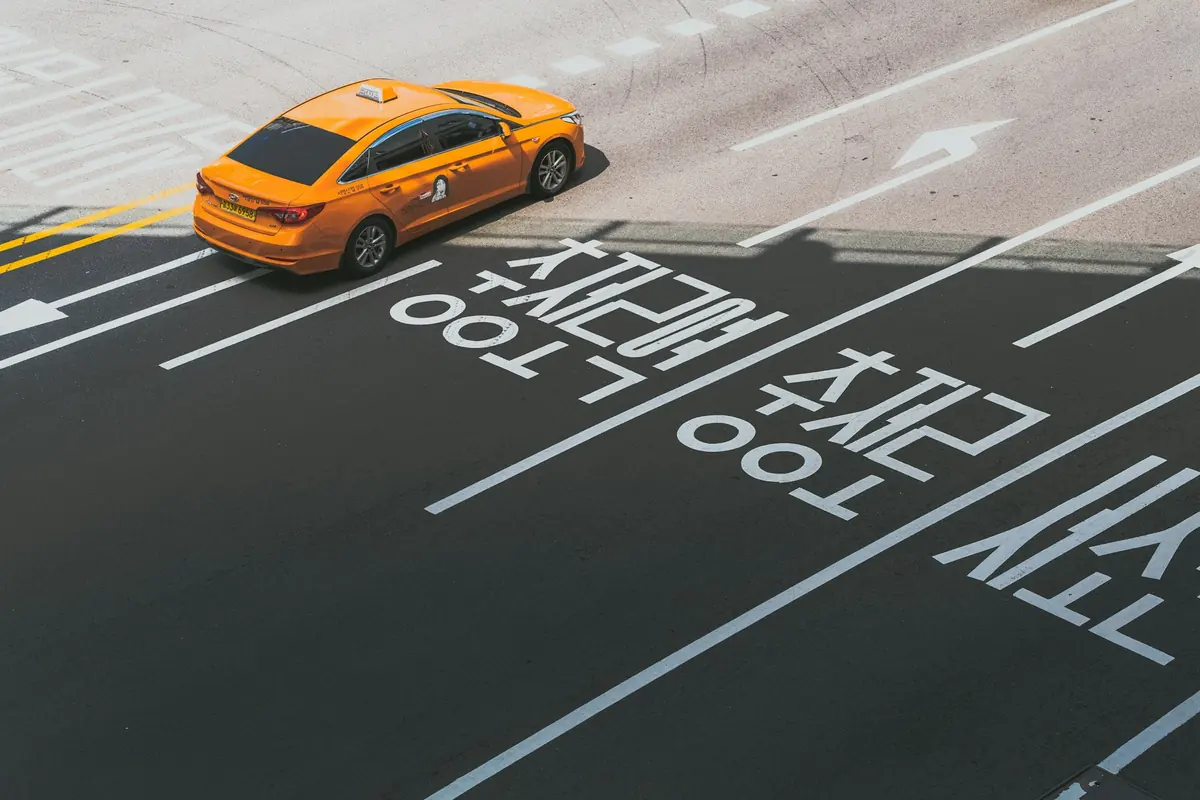
Taxi types in Seoul
| Type | What to expect | Notes |
|---|---|---|
| Regular (sedan) | The everyday city taxi | Cheapest metered fare |
| SUV / van / deluxe | Larger or premium vehicles | Higher base fare; good for groups and luggage |
| App “brand” taxis | Booked through an app, priced by the app’s own tariff | Seoul lists Kakao Black and similar services |
| International taxi | Drivers who speak a foreign language | Metered fare plus a 20% surcharge; flat zone fares to and from Incheon Airport |
Coming from the airport? Incheon Airport has its own taxi stands and warns travelers about unofficial drivers inside the terminal. Our airport-to-Seoul guide covers that trip.
Meter fares (Seoul regular taxis)
| Time | Base fare (first 1.6 km) | Distance charge | Time charge (in slow traffic) |
|---|---|---|---|
| Daytime (4 AM–10 PM) | ₩4,800 | ₩100 per 131 m | ₩100 per 30 sec |
| 10–11 PM | ₩5,800 | ₩120 per 131 m | ₩120 per 30 sec |
| 11 PM–2 AM | ₩6,700 | ₩140 per 131 m | ₩140 per 30 sec |
| 2–4 AM | ₩5,800 | ₩120 per 131 m | ₩120 per 30 sec |
That works out to a late-night surcharge of 20% from 10 to 11 PM, 40% from 11 PM to 2 AM, and 20% from 2 to 4 AM. The meter applies it automatically.
SUV, van and deluxe taxis start at ₩7,000 for the first 3 km in the daytime (₩8,400 at night), then ₩200 per 151 m or per 36 seconds. Their night surcharge is a flat 20% from 10 PM to 4 AM.
Other charges you might see
- Leaving Seoul: the city lists a 20% out-of-city surcharge. Combined with the night rate, a regular taxi can reach up to 60% extra.
- Tolls: charged at the actual toll amount when you agree to take a toll road.
- App call fees: some app-booked services add a call fee. The city lists up to ₩3,000 for one brand.
The Seoul government’s page states that all taxis must charge by the meter. A driver quoting a lump sum for an ordinary city ride is a red flag. The exception is international taxis with published flat airport fares (in Seoul’s table, ₩70,000–95,000 for a sedan depending on the zone).
How to get a taxi
- Taxi stands outside stations, big hotels and shopping areas. Queue and take the next car.
- Street hail. Wave from the curb where stopping is safe. A lit “vacant” sign (빈차) in the windshield means it’s free.
- Apps. Useful late at night, in the rain, or if you can’t explain your destination.
Show, don’t say. Have your destination’s name or address in Korean ready on your phone. A map app pin or a screenshot of the Korean address works better than a romanized spelling. Our Naver Map and KakaoMap guide shows how to copy a Korean address.
Taxi apps foreigners can use
In its January 2026 announcement, the Seoul government named these apps:
- For foreign visitors: K.ride (from Kakao Mobility) and TABA.
- For locals and visitors alike: TADA and Onda.
The city says these apps show an itemized estimated fare before you book, with the driving fare and toll fees listed separately. VISITKOREA’s app guide says K.ride accepts overseas credit cards and Alipay+, signs up with a phone number, email, Google or Apple account, and offers English, Japanese and Chinese.
A fare estimate isn’t a fixed price. The final meter fare can differ with traffic. We don’t recommend one app over another. Try them before you need one at 1 AM.
Paying and getting a receipt
- Card or transit card: Seoul taxis have payment terminals. T-money lists taxis among the places its visitor card works, so a topped-up transit card can pay too (see our T-money guide).
- Cash: carry some won as a backup in case a terminal fails.
- Always take the receipt. Ask for “yeongsujeung” (영수증) if it doesn’t print automatically.
What the new receipts show (since December 2025)
The city worked with the taxi payment terminal operator so that paper receipts now include English alongside Korean:
- the final fare
- the boarding and drop-off times
- whether a late-night or out-of-city surcharge was applied
- a line telling you how to report a problem (the 120 Dasan Call Center)
Fare terms across apps were also unified as “Meter Fare” and “Toll fee.” The city explained the change: old Korean-only receipts left foreign passengers unable to see whether a surcharge button had been pressed when it shouldn’t have been.
Overcharging: how to spot it and report it
Warning signs include a meter that isn’t running, a night surcharge during the day, an out-of-city surcharge on a trip inside Seoul, a lump-sum price for a normal ride, or a refusal to take you somewhere nearby.
Seoul’s figures show this does happen. The city received 487 complaints from foreign passengers between June and December 2025, with unfair fares the most common. Eight cases were confirmed and led to penalties including fines.
If you think you were overcharged:
- Keep the receipt. It shows times and whether surcharges were applied.
- Note the details: time, pickup and drop-off points, and any vehicle or driver information shown in the car or on the receipt.
- Report it:
- Seoul’s taxi QR complaint system (launched June 2025). Seoul hands out QR survey cards in English, Chinese and Japanese at the departure halls of Incheon and Gimpo airports, and the form is multilingual. We couldn’t confirm QR stickers inside taxis or at tourist spots.
- 120 Dasan Call Center (Seoul’s city helpline), the number printed on the new receipts. From abroad the city lists +82-2-731-2120.
- 1330 Korea Travel Hotline / Tourist Complaint Center, run by the Korea Tourism Organization. Call 1330 in Korea (+82-2-1330 from overseas) or use touristcomplaint.or.kr.
Report while the details are fresh. The city says verified complaints lead to administrative penalties such as fines.
Late-night tips
- 11 PM to 2 AM is the most expensive window for regular taxis (40% surcharge). A ride at 2:05 AM costs noticeably less than the same ride at 1:55.
- Big events end all at once. After a concert or festival, walk a few blocks away from the crowd or wait for the rush to clear before booking.
- Owl buses run after the subway closes, at ₩2,500 a ride (see the T-money guide).
- Share the trip. Send a friend your app trip details or the taxi’s details when riding alone late.
FAQ
How much is a typical taxi ride in Seoul?
It depends on distance and traffic. The daytime meter starts at ₩4,800 for the first 1.6 km, then adds ₩100 every 131 m (or every 30 seconds in slow traffic). Night rates are 20–40% higher.
Do Seoul taxi drivers speak English?
Many don’t. Show the destination in Korean on your phone, or book through an app that translates. International taxis have foreign-language-speaking drivers but charge a 20% surcharge.
Can I use my foreign credit card in a taxi?
Seoul taxis have payment terminals, and foreigner-focused apps such as K.ride accept overseas cards for booked rides. Keep cash or a topped-up transit card as a backup.
Is tipping expected?
Tipping isn’t part of the fare. Pay what the meter shows, plus any tolls you agreed to.
What if the driver used a night surcharge during the day?
That’s one of the issues the English receipts were designed to expose. Keep the receipt and report it through the QR complaint system, the 120 Dasan Call Center or the 1330 hotline.
This is an unofficial guide. We’re not affiliated with any taxi company, app or government agency, and we don’t endorse any app. Always check official notices for current fares.